Bring a character and a performance
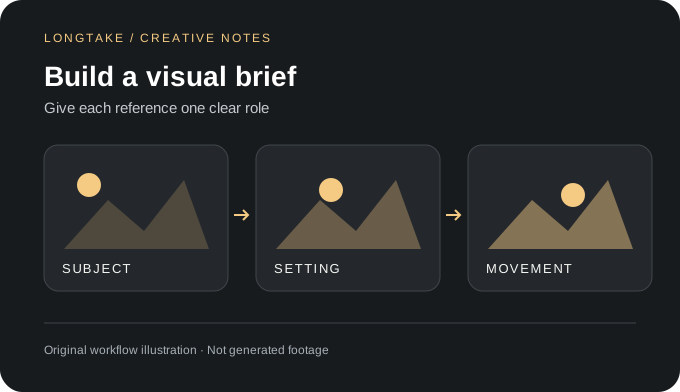
The V3 Motion Control endpoint accepts an image and a motion-reference video. Prepare the character separately from the movement so you can revise appearance without rewriting the performance brief.
Explore Kling 3.0 Motion Control with a character image, reference performance and orientation controls, plus a practical motion-review checklist.
This is a model feature guide. This model is not listed in Longtake's current catalog; the workspace offers other models.
The V3 Motion Control endpoint accepts an image and a motion-reference video. Prepare the character separately from the movement so you can revise appearance without rewriting the performance brief.
The endpoint exposes a character-orientation setting. Think about how the character faces the camera relative to the performer; mismatched viewpoints can make a copied gesture read differently even when the broad movement is recognizable.
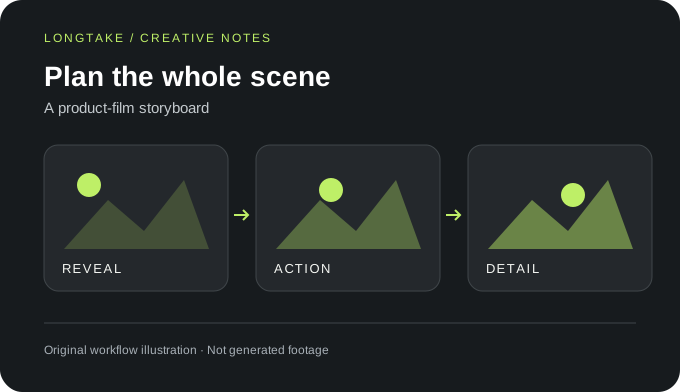
For a presenter taking a step and pointing toward a display, inspect foot contact, weight shifts and the pointing hand. Make those checkpoints part of the acceptance brief before judging whether the performance fits the edit.
Source: https://fal.ai/models/fal-ai/kling-video/v3/standard/motion-control. Checked October 16, 2026. Illustrations and scene briefs are original creative examples, not generated samples.
No. Motion Control adds a reference performance video to the character image. Ordinary image-to-video primarily derives movement from the generation prompt and its supported image inputs.
No controlled comparison is presented here. Use the same character and performance reference if you want to evaluate the two endpoints for your own project.